


Cisco recently hosted Cisco Connect Hong Kong 2026 under the theme “AI-Driven Innovation, Resiliently Connecting the Future.” At the event, Cisco introduced a comprehensive, end-to-end infrastructure portfolio designed for the era of agentic AI. Together with HKSAR government officials and industry partners, Cisco examined three key challenges enterprises face in deploying AI across the Greater Bay Area, aiming to help organizations in Hong Kong and beyond build secure, resilient digital foundations and transition toward the next phase of agentic enterprise development.

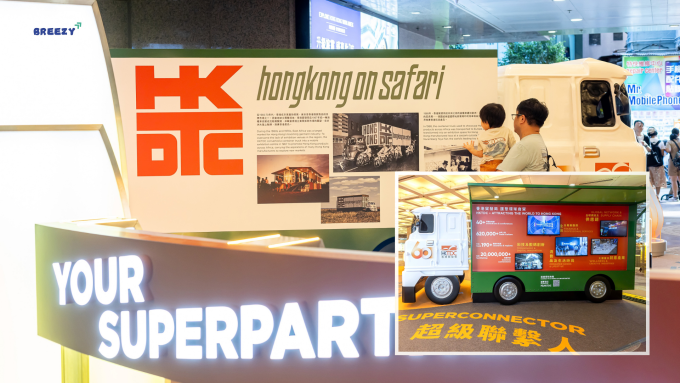
The opening ceremony featured Ms. Lillian Cheong, Under Secretary for Innovation, Technology and Industry, Government of the Hong Kong Special Administrative Region, alongside Cisco’s global and Greater China leadership team. Ms. Cheong highlighted Hong Kong’s role as a “super connector” linking Mainland China with the rest of the world, noting the city’s commitment to building a world-class innovation and technology ecosystem. She welcomed global technology companies such as Cisco to deepen collaboration through technology and ecosystem partnerships to accelerate the growth of the local AI industry and digital transformation.

Cisco, in collaboration with Foundry, also released a research report titled “The Time Is Now: AI Is Rapidly Reshaping Campus and Branch Networks.” The report identifies three major operational challenges enterprises will face as they scale AI agent deployment: AI-driven network traffic is expected to grow more than threefold over the next three years, with 76% of enterprises requiring network upgrades and 73% anticipating capacity limits within two years; 92% of enterprises struggle to address emerging AI-driven cyber threats, and 90% have already experienced related security incidents; and many organizations face visibility gaps that hinder a comprehensive understanding of operations. The report underscores that AI transformation cannot rely on compute power alone—resilient networks, embedded security, and end-to-end visibility are essential.

To address these challenges, Cisco showcased three key innovation pillars. First, the AgenticOps intelligent operations framework leverages the unified Cisco Cloud Control platform to integrate networking, security, and data resources, enabling coordinated management between AI agents and IT teams while simplifying operations across distributed environments. Second, Live Protect introduces embedded, proactive security by natively integrating protection into the network, allowing organizations to defend against emerging vulnerabilities without downtime, combined with Splunk’s data platform for end-to-end threat detection. Third, Cisco is advancing quantum-resilient technologies, including the Cisco Quantum Security Readiness assessment tool and a prototype universal quantum switch, designed to address long-term “harvest now, decrypt later” risks and prepare organizations for the post-quantum era.
Mr. Louis Mah, Senior Director of Information Technology at Maxim’s Group, shared practical insights, noting that while AI-driven automation enhances operational efficiency, enterprises must also establish robust security and governance frameworks. Cisco’s comprehensive, end-to-end technology portfolio—from network to application layers—serves as a trusted partner for enterprises adopting AI in a steady and secure manner.
Mr. Wilson Ching, Managing Director, General Manager of Guangdong, Hong Kong and Macao, Cisco, added that Hong Kong is at a critical juncture in its digital transformation journey, with rapidly growing demand for secure and scalable AI infrastructure. Cisco will continue to bring leading global innovations and collaborate with ecosystem partners to support enterprises in Hong Kong and the Greater Bay Area in deploying AI securely, using digital resilience to drive sustainable industry innovation.










Leave a comment