


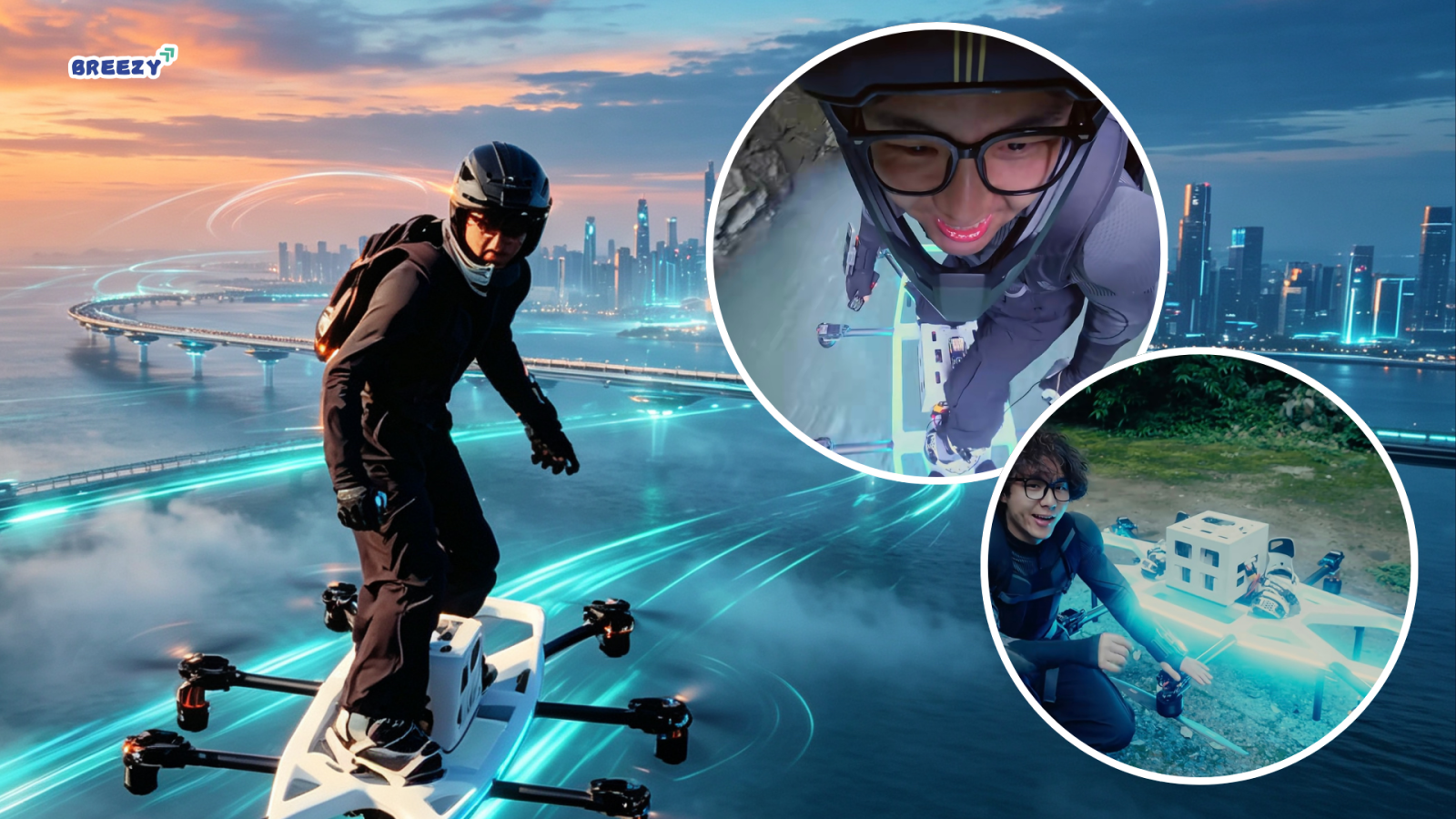
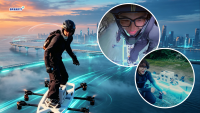
Personal low-altitude flying devices from science-fiction films are no longer confined to the screen. Song Xingyu, a post-2000s self-taught tech blogger known online as “Magic A Yu,” has developed an electric flying hoverboard capable of carrying a person and hovering steadily. The device recreates the “airborne gliding” scenes seen in classic films and has successfully completed a low-altitude river crossing test. Its results have been verified by authoritative mainland media including CNR and The Paper.
According to technical test data published by the media, the hoverboard went through two major iterations. The initial team tested a design using five miniature turbojet engines, with enough total thrust to carry the weight of three adults. However, the densely packed engines caused heat dissipation problems, with hot exhaust gases flowing back into the air intakes. The device eventually caught fire and exploded, destroying its fuel and electrical systems and ending the turbojet approach.
Rather than abandoning the project, the team fed all the failed test data into an AI agent for in-depth analysis. Following the AI’s optimisation recommendations, the developer abandoned the high-risk turbojet design and switched to a more stable electric multi-rotor propulsion system. The Version 2.0 electric model was completed in just two months.
Publicly available technical specifications show that the Version 2.0 electric hoverboard is equipped with 10 high-power brushless propulsion units, each generating more than 30kg of thrust. The total thrust can support the weight of four adults, while the device’s peak operating current reaches 2,000 amps. The stable yet powerful output solves the insufficient thrust and poor stability of the first-generation model.
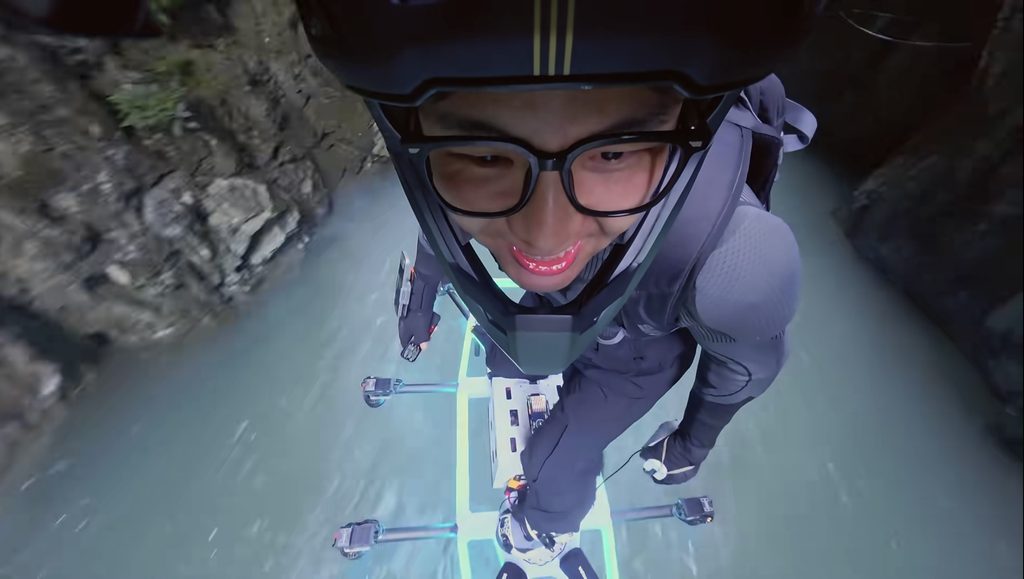
Compared with ordinary drones, the biggest technical challenge is synchronising control between the human body and the device. With no wings or physical steering mechanism, even a slight shift in the rider’s centre of gravity can cause the board to lose control and tumble in mid-air. To overcome this, the developer created a unique dual-phone AI-assisted control system: one phone is built into the hoverboard’s base to collect real-time flight attitude and tilt data, while another phone worn on the wrist serves as the computing core. Through Bluetooth earphones, the system provides real-time voice instructions on shifts in the rider’s centre of gravity and body adjustments, while automatically generating flight training reports to improve control accuracy.
After more than 10 days of intensive test flights, the developer fully mastered the device’s controls, successfully achieving static hovering, stable straight-line cruising and a low-altitude river crossing. With smooth gliding and stable posture throughout, the project challenges the common perception that personal flying devices are limited to short experimental take-offs.
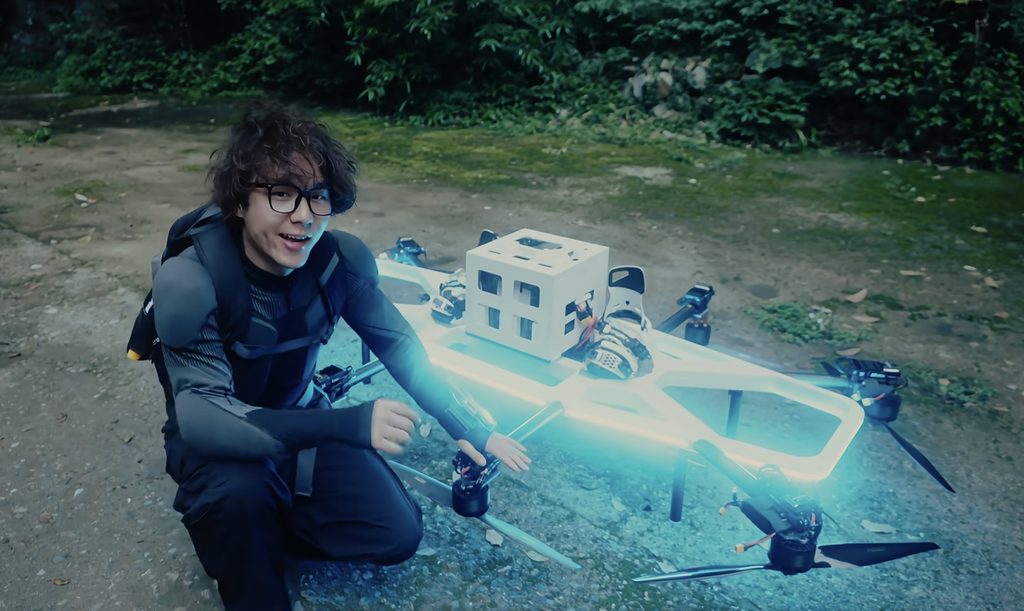
Compared with the personal flying vehicles developed by overseas tech giants, Musk’s team is pursuing a heavy-load, high-cost commercial route with large flying cars. This domestically developed DIY hoverboard instead focuses on lightweight design, low barriers to entry and practicality, targeting urban low-altitude personal commuting. Its AI-powered attitude correction technology makes it better suited to everyday low-altitude mobility needs.
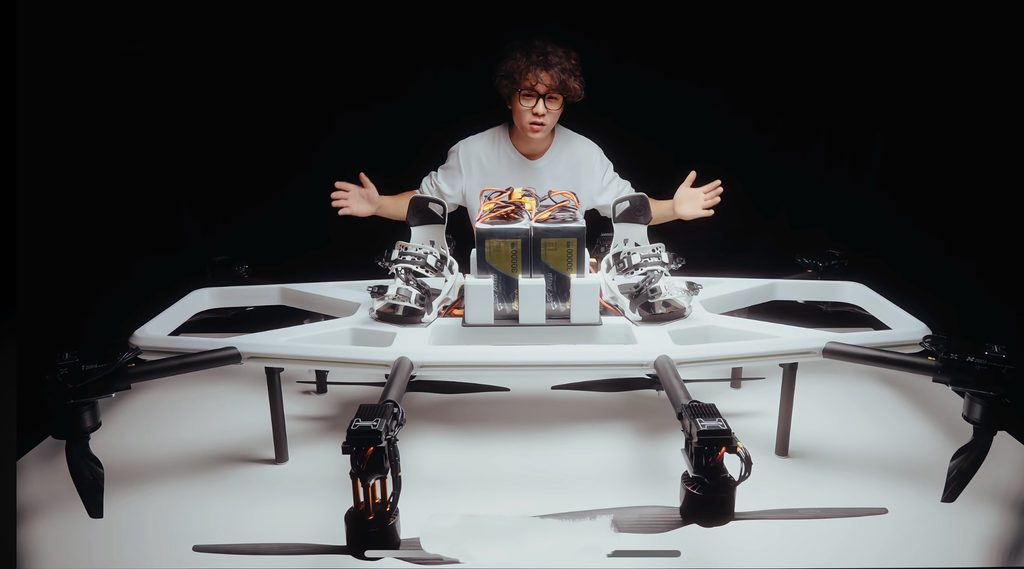
Industry observers say the home-built innovation not only demonstrates the self-learning ability and engineering skills of young Chinese tech enthusiasts, but also proves the practical value of AI in low-altitude flight attitude correction, failure analysis and design optimisation. It offers a new technical approach and reference model for the civilian development of lightweight personal flying devices.













Leave a comment