


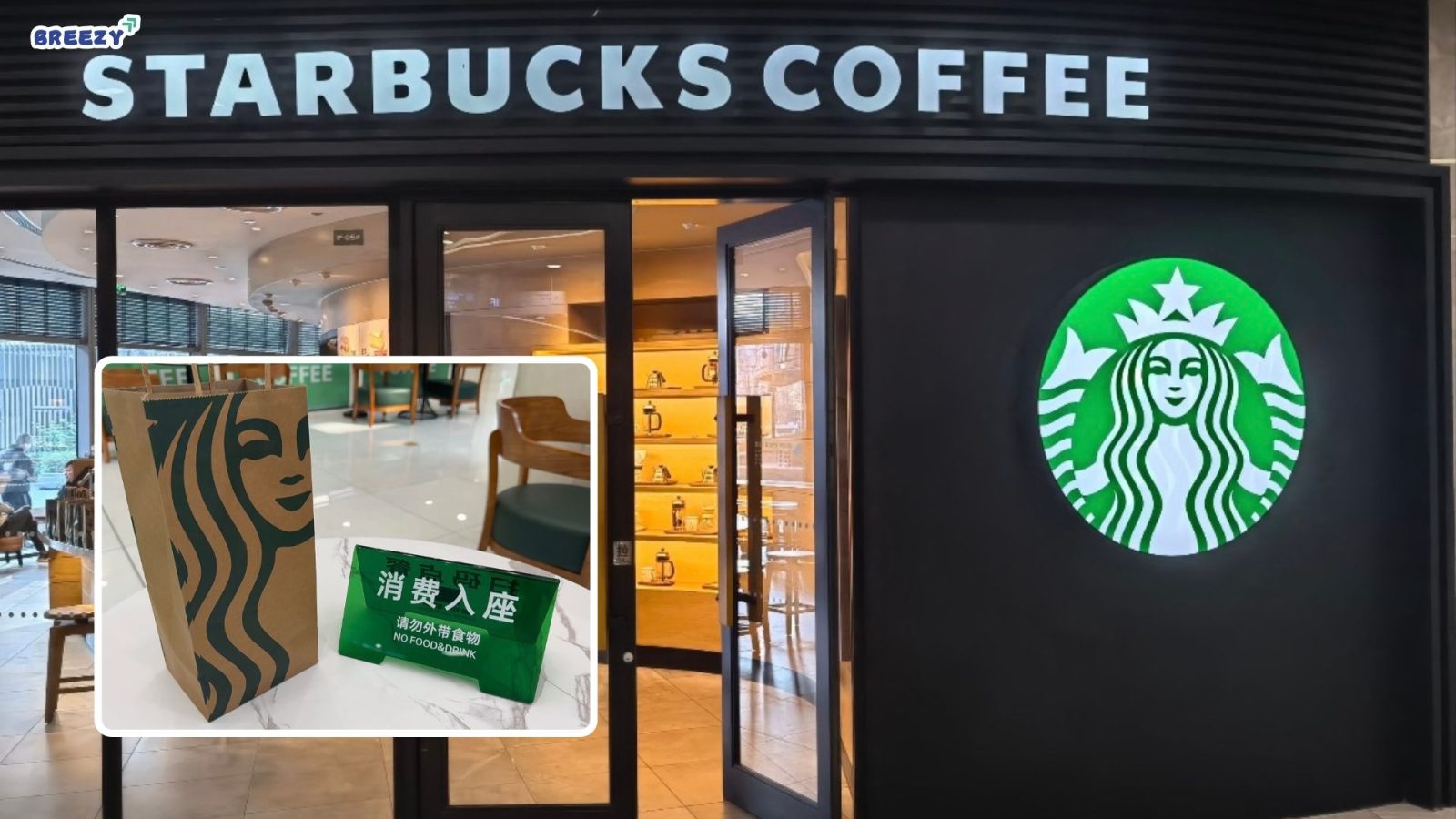
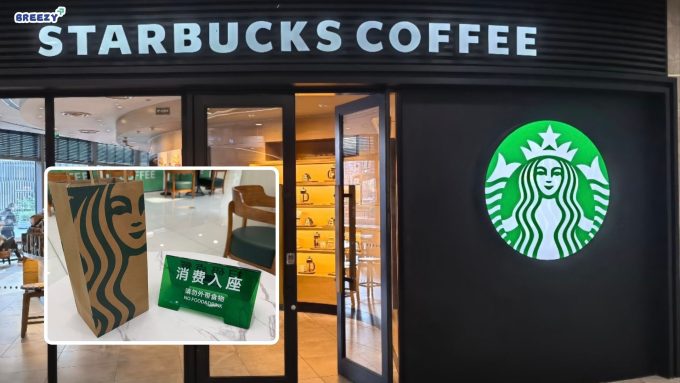
Starbucks’ “third space” — where customers have long been able to study, chat and relax for hours — is set for a major change. Starbucks China has confirmed that, from Thursday, all stores nationwide will implement a “purchase-to-sit” policy. Signage will remind customers that seating is for those making a purchase, although the brand stressed that the rule will not be applied rigidly, with flexibility for pregnant women, people with mobility difficulties and others in need.
Photos of the “purchase-to-sit” signs circulated online several days ago, quickly trending on Weibo. While some reports suggested the rumours might be untrue, the company has now confirmed the new arrangement, which officially takes effect today.
Public reaction has been sharply divided. Many support the move, saying they often see people occupying seats for long periods without buying anything, leaving paying customers with nowhere to sit. They argue the new rule protects consumers’ rights.
Others, however, find the change hard to accept. Starbucks has long positioned itself as a “third space” — a place to relax and socialise outside home and the office. Tying seating directly to purchases, they say, breaks the unspoken understanding customers have had with the brand for years.
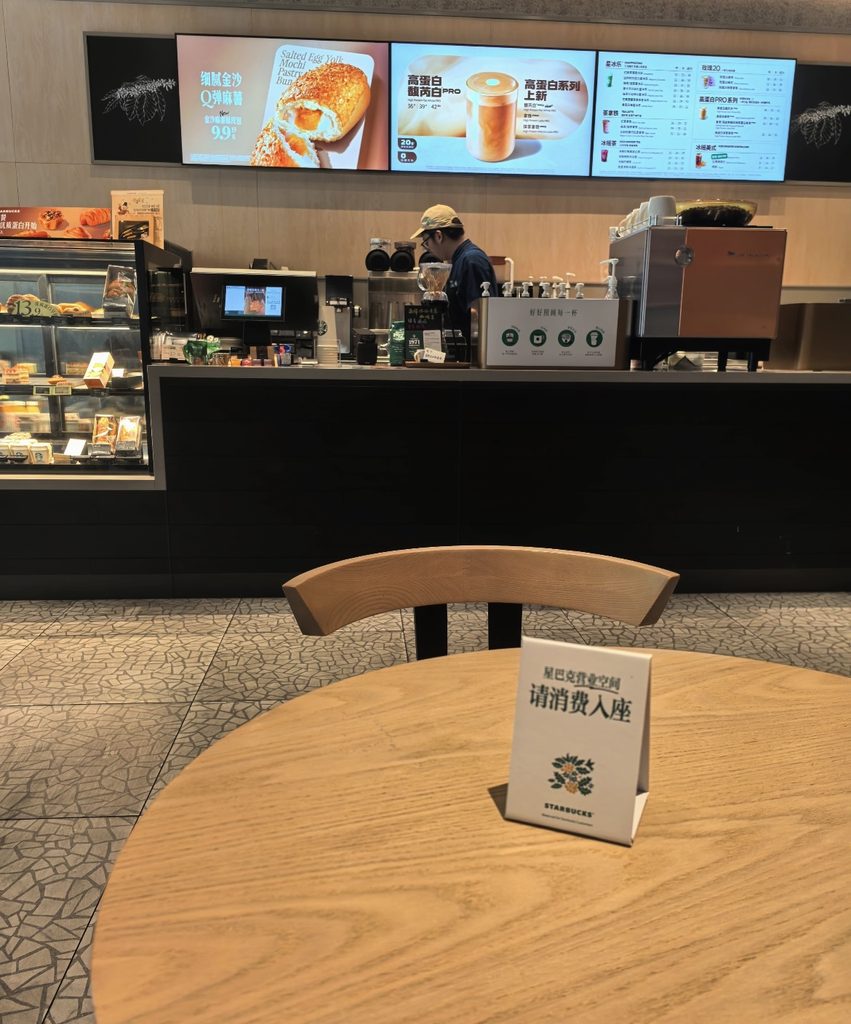
The move is not unique to mainland China, as Starbucks branches elsewhere have gradually introduced seating restrictions. In Hong Kong, branches at Sha Tin New Town Plaza and Metroplaza in Kwai Fong began trialling a 90-minute dine-in limit during peak hours in September. In South Korea, stores introduced rules at the start of the year banning customers from bringing large electronic equipment such as printers and power strips, in a bid to curb prolonged stays for work or study.
The reasons behind the change are not difficult to understand. Rising rents and labour costs, combined with large numbers of seats being occupied for extended periods, have made the once free-flowing “third space” model increasingly difficult to sustain. The new policy in mainland China can be seen as an adjustment driven by operating pressures.
The question now is whether “buy something to sit down” is reasonable: does it return seats to genuine customers, or does it end the romance of lingering in a café for half a day?








Leave a comment