


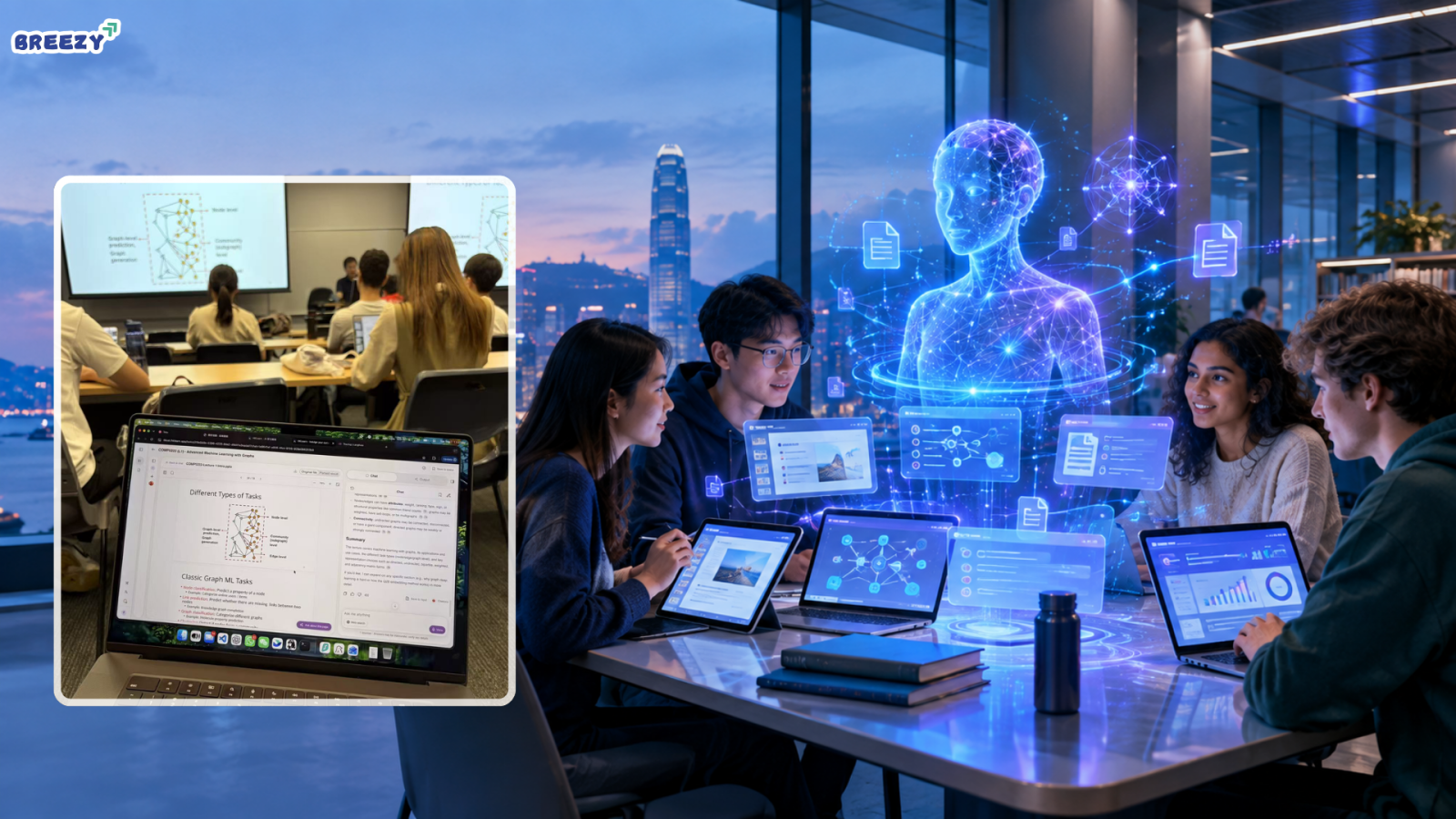
The Hong Kong Generative AI Research and Development Center (HKGAI) has launched HKLearn, an AI teaching and learning assistant designed for higher-education institutions, with the Hong Kong University of Science and Technology (HKUST) becoming the first university to deploy the platform.
Powered by HKGAI’s locally developed HKGAI V3 large language model, the HKUST version is known as the HKUST Teaching Agent. More than 3,000 students have registered for the service, while the platform has accumulated over 240,000 uploaded learning materials.
Built Around Course Materials
HKGAI positions HKLearn as more than a conventional chatbot or learning management system (LMS). The platform uses course syllabuses and original teaching materials as its core reference points, combining curriculum-driven learning with a curiosity-driven approach.
Under the tagline “Indulge your curiosity”, HKLearn is intended to support a scaffolded learning process: students can explore course materials, raise questions in context, verify information and turn content into revision resources. Rather than simply providing quick answers, the system aims to help users understand knowledge within the framework of their specific course.
Four Key Features
1. LMS and Canvas synchronisation
With student authorisation, HKLearn can synchronise course syllabuses, lecture notes and reading materials from LMS platforms such as Canvas. The content is then organised into a personalised AI learning workspace, reducing the need for students to manually collect and manage course files.
2. Source-linked AI answers
Students can ask questions while viewing lecture notes, PowerPoint slides, individual pages or complex diagrams. HKLearn’s responses are designed to point users to the relevant source pages in the original materials, enabling them to check the basis of an answer immediately.
The source-linked approach is intended to make AI-generated information more traceable and verifiable, while reducing the risk of generative-AI hallucinations in an academic context.
3. Instant revision materials
The system supports materials in formats including PDF, Word, PowerPoint, images and audio or video files. It can transform course content into revision tools such as:
- Quizzes with answer analysis and source citations
- Flashcards
- Mind maps
- Summary documents in Word or Excel formats
- Podcast-style learning content
For students preparing for assessments, the emphasis is on turning course notes into structured, reusable study resources instead of relying solely on generic AI summaries.
4. Learning analytics for teachers
HKLearn can track data including students’ question frequency, areas of interest and use of learning tools. HKGAI said it plans to provide teachers with more comprehensive analytics in the future, helping them identify learning needs, refine course design and support more personalised teaching.


Expansion Across Hong Kong
HKGAI said HKLearn has received positive feedback from students and faculty during its HKUST rollout, and it is planning to expand trial use to other post-secondary institutions in Hong Kong.
The platform’s learning workflow is structured around three stages: exploring materials, understanding through questions, and applying what has been learned. As more local universities explore AI-enabled education, the next major issues will be how institutions balance convenience with academic integrity, privacy protection and teachers’ central role in the learning process.












Leave a comment