


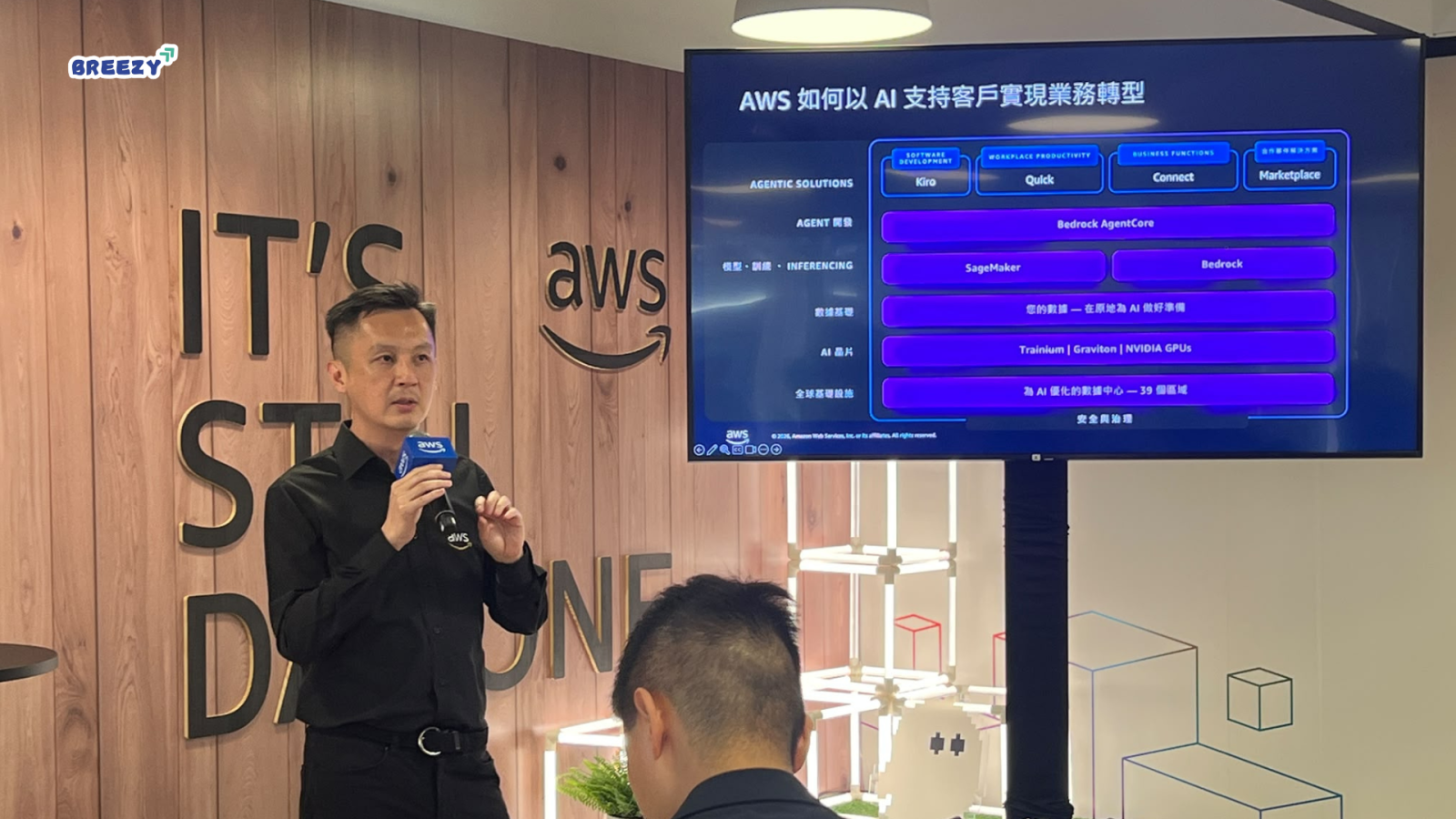
AWS (Amazon Web Services) recently announced that its enterprise AI assistant, Amazon Quick, is now generally available as native desktop applications for macOS and Windows. At the same time, a new activity feed (also referred to as a dynamic information stream) has been added to the iOS and Android mobile apps. The solution focuses on unifying work signals scattered across email, instant messaging, CRM systems, calendars, and other tools. AI agents automatically filter, process, and follow up on tasks, allowing users to concentrate on work that truly requires human judgment.

While enterprise adoption of AI applications is already widespread, AWS Greater China Head of Partner Solutions Architecture Dickson Yue noted that organizations still face four major pain points even as AI agents boost productivity:
- Data fragmentation — information is scattered across CRM systems, analytics tools, documents, and spreadsheets.
- Time lost switching applications — employees spend more than 40 hours per month jumping between different tools.
- Lack of continuity — AI work started on the desktop cannot be seamlessly managed or continued on mobile devices.
- Insufficient centralized governance — enterprises struggle to manage AI platforms in a unified way, including data access controls, permissions, agents, and their associated skills.
Amazon Quick is designed to address these challenges. The desktop version can connect to local files and commonly used applications while continuously learning users’ work habits and context through ongoing interaction. Users can initiate tasks on their computer; even after closing the laptop, agents continue running in the background. Progress updates, pending decisions, and important notifications are synchronized to the mobile app, enabling users to handle work in real time while commuting or away from the office.

The newly introduced activity feed specifically targets the common problem of “notification fatigue.” The system consolidates messages from multiple sources into a prioritized to-do queue based on interpersonal relationships, work priorities, and user behavior patterns. Tasks that agents can complete independently fade out of view, reducing redundant follow-ups and information overload. This shift from a “newest messages first” approach to a “most important items first” design can help management and cross-functional teams improve decision-making efficiency.
AWS Enterprise AI Strategy & Transformation Leader Terence Chow explained that Quick goes beyond answering questions. It can aggregate data across systems, draft deliverables, update records, and execute follow-up actions.
Editor’s Comment
As enterprises accelerate the deployment of generative AI, the competitive focus is shifting from chatbots to truly task-executing Agentic AI. Amazon Quick positions itself as a work partner that connects to existing enterprise systems, operates across devices, and preserves human decision-making authority. For Hong Kong companies that handle large volumes of information, track multiple projects, and need to produce content quickly, the practical value of such tools will depend on their integration capabilities, accuracy, governance mechanisms, and ability to genuinely reduce administrative overhead. Amazon Quick’s launch materials also emphasize that governance and accuracy safeguards are built into the platform.
















Leave a comment